
By the end of summer, most of us have spent more time outdoors than we realise, whether that has been at weekend sport, in the garden, at school events or simply keeping up with family life.
Even when a tan fades or sunburn settles, ultraviolet damage can remain in the skin for years, which is why late summer is a sensible time to take a closer look.
Australia continues to have one of the highest skin cancer rates in the world, and melanoma is still the most dangerous form.
What this article covers
- Melanoma March
- How skin cancer begins
- What can happen if melanoma goes untreated
- Whether a bit of sunshine is actually good for you
- What happens during a skin check
- How to check moles at home
Melanoma March and why it deserves attention
Melanoma March is Melanoma Institute Australia’s major annual community campaign, bringing people together to raise awareness and support research aimed at reducing deaths from melanoma.
At Trident Medical Centre, we see this as a useful reminder for Australians to pay attention to skin changes and not put off a check.
As Melanoma March highlights, melanoma is the most common cancer affecting Australians aged 20 to 39, and around one Australian is diagnosed with melanoma every 30 minutes.
How skin cancer begins
Skin cancer starts when ultraviolet radiation damages the DNA inside skin cells. Your body repairs much of this damage, but repeated exposure increases the chance that some cells will not recover properly.
Over time, those abnormal cells can keep growing and form skin cancer.
Melanoma can arise as a new spot or develop from an existing mole that changes in colour, shape or size.
What happens if it goes untreated
When melanoma is found early, treatment is often simpler and may involve a minor procedure.
If it is left to grow, it can spread deeper into the skin and to other parts of the body, which is why doctors place so much emphasis on early detection.
The Cancer Council notes that the five-year relative survival was almost 100% for melanoma diagnosed at Stage 1, but only 26% when diagnosed at Stage IV.
Isn’t a bit of sunshine good for you?
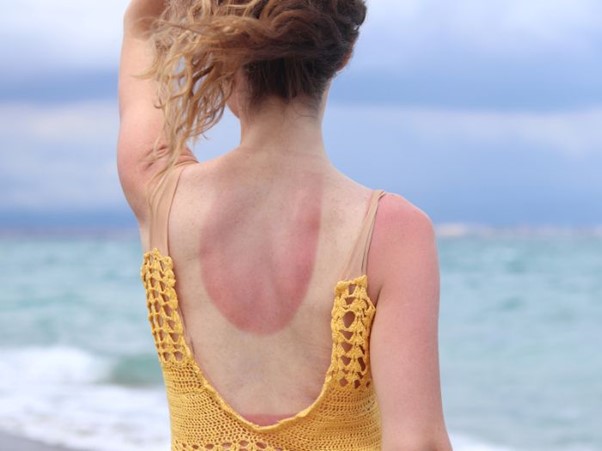
Sunlight does play a role in vitamin D production, but in Australia UV levels are often strong enough to damage skin quickly, even on days that do not feel especially hot.
The goal is not to avoid the outdoors altogether. It is to be realistic about how easily UV builds up over time, especially after a full summer.
The UV Index is a useful guide, as levels of 3 or above are considered high enough to cause skin damage and are common across Victoria for much of the year.
What a skin check involves
A skin check is a careful examination of your skin by a doctor trained to assess suspicious spots, including areas that are difficult to see yourself, such as the scalp, back and backs of the legs.
Doctors may use dermoscopy to look more closely at a lesion and decide whether it should be monitored, photographed or biopsied.
Some important points about skin checks:
- They are quick and painless
- Doctors only check areas you are comfortable with
- Skin checks are done in private rooms
- You can bring spots you may have noticed to your doctor’s attention
- Trident Medical Centre offers both male and female doctors
Skin changes can be subtle, and many early skin cancers do not cause pain. A professional check gives you the chance to pick up changes early, before they become harder to treat.
This is particularly relevant after summer, when cumulative exposure may have added to damage already stored in the skin.
Book your skin check, or learn more on our Skin Cancer Checks page.
How to check moles at home
It helps to become familiar with your skin so you can notice a new spot or a mole that changes over time.
Cancer Council’s guide to checking your skin at home explains what to look for and when to see a doctor. Find the guide (with images) here.
If you have noticed a changing mole, a new spot or an area that does not heal, or it’s been a while since your last skin check, we strongly recommend booking a skin check.
For those in Officer and nearby suburbs, the end of summer is a particularly good time to have your skin reviewed properly.